
Public Information Videos have an interesting challenge: they must simplify what is sometimes complex guidance, connect with varied audiences, and push for real-world action – often on a tight budget.
Having produced numerous public information campaigns for charities, healthcare providers, and public bodies, we at Digital Finch have identified a few key points that separate a video that gets ignored and becomes a waste of money and resources from one that helps promote meaningful change and supports the community.
Our rich experience includes explainer videos for mental health charities, medical and healthcare videos, filmed instructional videos, and animated videos for NHS trusts, larger charities, and CICs. So here are five core lessons we’ve learned along the way.
1. Accessibility Belongs at the Start
Accessibility shouldn’t be an afterthought patched on after the video is done. Professional design and animation with accessibility from the start, using clear contrast ratios, visual hierarchy, readable font sizes, subtitles, and space for BSL (British Sign Language) overlays where possible.
These steps help ensure your video’s message reaches everyone, including non-native speakers, viewers with disabilities, and the up to 85% of social media users watching with sound off.
A great way to ensure video accessibility is to work with a studio that knows it; professional designers who are aware will address more design issues that an amateur may not be aware of. You can find out about this in an early meeting/emails if they don’t mention it on the website.
Another great tip is to have a working group with a diverse range of people on the video project team. This will help ensure the video connects with a wider audience and reduces the chance of actually alienating or offending people. A group of white men will not have the same ideas and experiences as a group with different abilities, heritages, and age ranges. It will likely produce a video with more limited appeal.
An additional consideration is especially important for medical or healthcare-related topics: ensuring that it isn’t too complex, that the messaging isn’t infantilising, and that it provides a clear action to take next. Or for projects around young people, as most of the people working will be older than the target audience.
Full video localisation into another language is also possible if there is a high proportion of speakers for whom English is a second language. This is where you replace all audio with the native language and subtitles, so that ESOL speakers understand the message much more clearly. We created a video for pregnant women and created it in 6 languages, including Urdu, Pashto, and Arabic, as well as 6 versions of professionally created foreign-language subtitles against the English video – which is a budget-friendly halfway point.
2. Animation Supports Sensitive Topics
When dealing with delicate subjects like mental health, domestic safety, young people or complex medical guidance, live-action video can sometimes feel intrusive or overwhelming and is not appropriate.
It’s also tricky to film people who have been through these experiences; they may not want to be on camera, or they may be too vulnerable to be shown.
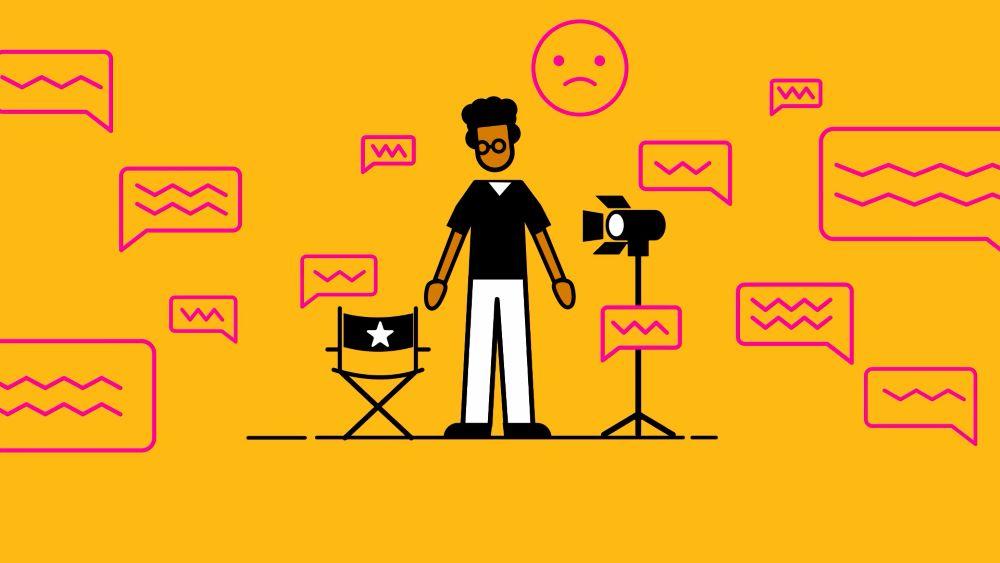
Animation and explainer videos create a safe distance, allowing viewers to relate to sensitive topics without feeling judged or triggered. Carefully thought-out design, either drawing characters or using more abstract concepts, included in an public infomation explainer video can make complex policy or medical concepts visually intuitive. Design can also make the video more diverse by intentionally including characters with disabilities or ethnicities.
There are many ways to include personal stories and rich lived experience into video productions without showing people’s faces.
3. One Video Becomes Five
We’ve seen time and again that public-sector and non-profit budgets need to go far. Rather than creating a single long-form video for a website like we used to do when we started out, modern campaigns require a modular strategy.
Creating a “hero” 90-second video allows the studio to easily cut 15-second vertical clips for TikTok/Instagram, static graphic assets, and audio snippets for radio or podcasts, maximising your ROI without increasing production scope. Most studios can create a range of shorter assets from long-form video, and we now usually offer this as standard for our filmed video productions.
With animation, a vertical version is not as straightforward as a video edit; it may require a bit of extra budget because scenes need to be redesigned to accommodate it. So even if that is out of reach, you can also use the still artwork designed, as long as you have a clear conversation with the studio about it and its uses. This artwork may be used in presentations, on the website, and on social media, etc. Sometimes a studio may also charge for this service, but it can create a unified campaign brand that supports the messaging holistically.
4. Focus on One Clear Action or Audience
One of the most common mistakes in public service messaging is trying to communicate too much at once. If a viewer finishes your video with three different distinct instructions, they are less likely to remember them all. And these kinds of videos often include a list of actions, and it’s important to keep it from being too dull or dry, or they will switch off. We keep it as short as possible and as relevant to the topic as possible – succinctness and clarity are key
In the scripting stage, right at the start, it’s important to identify the single most important action, whether visiting a URL, changing a habit, or contacting a helpline, and anchor the narrative around it.
If there are many messages or many audiences, additional videos may be required to create a more targeted approach for each. Sometimes this is a whole new video, or it may need a section adapted each time to reduce costs. We made a mini public explainer video series with a 30-second shared intro for every video, and the rest of the content for each was bespoke. We worked on which content was relevant only to which audience, and which content both audiences needed to see.
Usually, a video studio can determine this pretty quickly by looking at the raw content, whether it’s a flyer, a webpage, or a longer report. They will be able to condense the message to the most important parts for a unified story.
5. Clarity Beats Cleverness
Creative flair is important, but never at the expense of clear messaging. Public service videos succeed when they speak in plain, human language rather than bureaucratic council-type jargon.
A straightforward, emotionally authentic message will always outperform a too-complex concept in informing and assuring the public.
How Charities & Non-Profits Use Public Information Videos for Social Impact
Public information films aren’t just for government bodies; they are one of the most effective tools for registered charities, CICs, and advocacy groups. Whether you are running a public health campaign, raising awareness around youth mental health, or educating communities on vital social services, video translates complex policy into human storytelling.
At Digital Finch, our charity video production services help non-profits craft clear, empathetic public information campaigns that drive real community engagement and funder trust.
You can trust us to create engaging explainer videos and filmed content that make public information clear and accessible to everyone. Please get in touch for a quick quote